• The next generation computation devices are lurking around in TED as sixth sense devices and labs are experimenting contact lens devices to present the most relevant information in real-time with out manually seeking. The devices will search for relevancy and the present the information to the user. It is very similar to Terminator movie (please watch video carefully at 2.13)  where the aliens receive the most relevant information for the given circumstance. The future devices will make the information readily available based on our circumstance, situation, and mood.  Well, it is not science fiction any more and it will soon become a  reality.

    For those future devices, which are currently in experimental labs, the key component is an information gateway. Information gateway will seek  relevant information for each user based on location, mood, and circumstance.  The information gateway are nothing but the next generation smart phones. These information gateway will replace personal usage of PCs and laptops.

    Google strategy team stuck a good balance to compete in the current market with Apple iPhone, RIM’s blackberry and laid basic foundation for information gateway market.  Google launched Nexus one as their phone product today to consumer using Android operating system. Nexus one provides easy integration for all social networking tools and techniques. There are more detail comparison done between Nexus one and iPhone and this article focus is to study Google’s strategy and it’s alignment for future technology evolution.

    Google’s strategy to provide options to consumer to select the service providers  invites more customer base. However, I’m not excited about its  pricing strategy. The device cost around $520 per unit. The pricing strategy will not let current iPhone users to migrate to Nexus one and also blackberry users will not quickly migrate to Nexus one since it does not focus more on running business application (like VIN locator, inventory management and etc).

    Nexus one is an another great thing for Google but the unit price needs to come down..
  • “Everyone knows someone who loves Honda” commercial in context with Honda Facebook is a prime example how social network channels have changed today’s business.  If any IT executives still thinks that social networking platform is for kids and teenagers, wake up! You have already missed lots of opportunity, try to speed up and catch on.

    Social network is integral in today’s sales and marketing for almost all products and services.  Customization of a product or service based on each individual requirement is not a new concept and it has been discussed and implemented in isolation. The challenge faced before was to approximate each individual’s requirements and social network is an approach to approximate individual’s requirement. Once the requirements are understood, social networks are again used to influence individual customers to buy the given product or service. There are quite a few books written to leverage social network to promote and market products and services. To summarize, in today’s challenging market, it is obvious and evident that social network plays major role in selling product and services to consumers and some cases, even to big corporations.

    Given this context, current economical circumstances, growth potential, emergence of cloud computing, compliance conformance requirements,

    The following IT jobs will have high market demand in 2010..

    1. Enterprise Architect – (Thorough understanding of business process management, business strategy, IT strategy, portfolio management, social networking tools ,techniques and its business application and etc)
    2. Security Officer/Analyst (Audit, compliance,policy management, Threats from social networking, Identify Management Strategy,proactive incident avoidance – data loss prevention)
    3. Network Engineer – (SAN/IPS/BGP/SONET/DNS/Firewall/Load Balancer/NetCache devices/SSL Accelerator/SMTP/SNMP/High availability/Disaster recovery/..)
    4. Cloud Architect ( Cloud operating system – like VMVare, Business cloud)
    5. Application Architect – (open source technologies,blog – wordpress, blogspot, facebook, youtube, SaaS, twitter, GoogleWave, web services, Rich Internet application – AJAX/Adobe Flex/Microsoft Silverlight)
    6. Information Architect (Data Mining, Dataware house, Reporting, business intelligence, text minig, search optimization)
    7. ERP specialist (SAP, PeopleSoft, JD Edward, Oracle financial, Banking – Fidelity, FiServ, Shaw, Phoenix, Hartland, and etc) 
    8. Vendor/Contract Management ( ITIL)
    9. Program/Project Management (PMBOK, PRINCE frameworks)
    10.Smart Phone Application Architecture & Design – (iPhone, BlackBerry, etc)

  • In a previous blog posting, I provided an exhaustive list of almost all technical components.  Each one of the component plays a role to enable holistic IT service to support business function.  However,to run a successful IT organization, does the IT organization required to have a handle on each component in the list?

    Lately, my former  colleague and good friend, who works for GE now, have been discussing the importance of oral and written communication skills in an executive level job.  During those discussion, it occurred to me that the next generation corporate communication will be much more simplified and tailored to individual audience. An executive from Gen Y, may not have patience to read a document to understand the status of a company or progress of a project.  The type of communication tools and channels will be used by Gen Y executives are yet to discovered but it is  incubating for evolution.

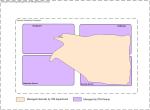
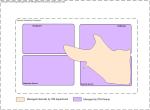
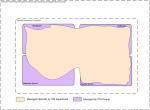
    Keeping those thoughts in my mind, instead of using a traditional method like Venn diagram to communicate direct  involvement level in technical components  by an IT organization, I would like to use the  abstract pictures to demonstrate current involvement and transition to a different level by adapting managed service and cloud computing concepts.

    When IT organization is  a cost center (it means it does not directly generate revenue for the company), the organization required to focus on technology stack which provides competitive advantage to its core business. It is particularly essential during this challenging economical time to focus on technologies that impacts business bottom line. The IT organization must have no or minimum direct involvement in non strategic technical components.

    The figure 1. abstract picture provides current IT direct involvement in four categories. I have seen, still companies have internally maintain and manage payroll systems for its employee. For an instance, if an IT organization is supporting financial service or retail business, there is absolutely no competitive advantage for that organization to manage internal payroll systems. The reason is not just for cost saving, but the key point is focus.

    Around fifteen years ago, the options were limited to leverage outsourced payroll service but now, there are lots of options available to receive world class service on common business services. Common business services are, but not limited to, payroll, badge system, email, infrastructure system softwares, infrastructure monitoring, corporate communication tool set, learning and development, pension, benefits,  IT asset management, IT Finance management and etc. These services are readily available from a third party providers as a service. These services are all required for any IT organization but, generally not a differentiator for cost center IT organization.

    IT organization’s senior executives and CIO wanted their organization to focus on technologies directly contributes to their business bottom line.  The systems/technologies that  touches the end user of their core business, and the systems directly used to support the business process.

    Managed service and cloud computing are two solution available to let the organization focus on differentiator technology and let the partner perform the rest.

    Managed service is a concept to leverage partners to provide a pre-term service.  IT organization manages the partner in a SLA level with no or very minimum involvement in solution design. Managed service deals are designed for fixed terms for fixed service portfolio. This deal package limits organization’s agility to fluctuate their service portfolio requirement based on its business needs.

    Cloud computing is  an elastic managed service concept and it provides flexibility to scale up or down based on business needs with no prior commitment  on terms and service portfolio.  On cloud computing service offering from various providers like google & amazon, IT organization required to FOCUS on differentiator technologies and manage the rest by managing the SLA but not by technology (technical component)